
Decades
Our History
In the early 70’s local farmer Tom Kinnaird had a vision to change the use of his sheep farm to something much more exciting! In 1974 the first motorcycle race took place, since then a huge amount of racing stars and spectators have passed through the gates. Some of the memories from the decades are highlighted in the timeline below.
-
70's
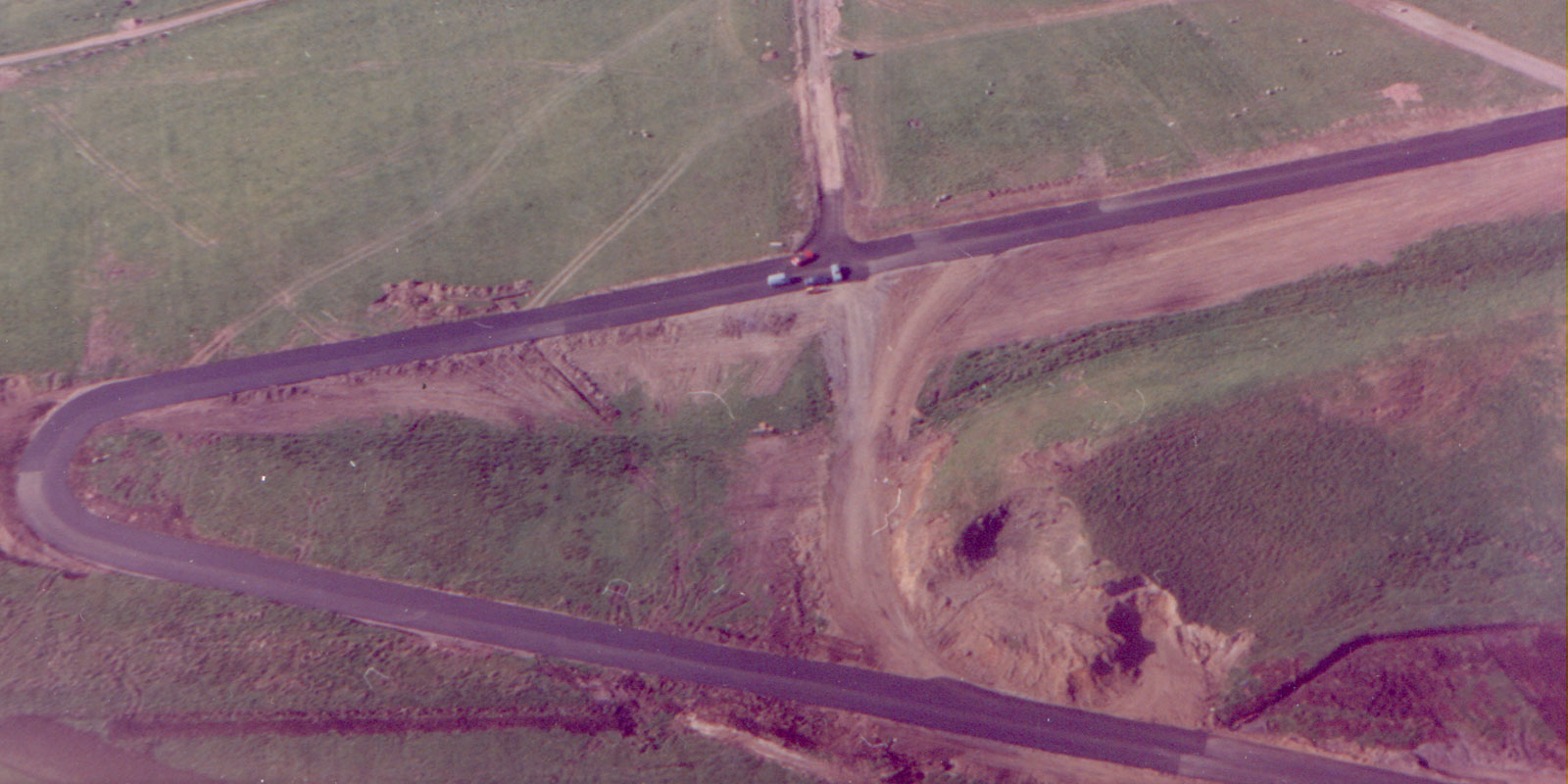
Tom Kinnaird’s farm, in the lee of the Knock Hill boasted a narrow farm service track and a disused railway line. His vision was to link these resources to create a demanding road-circuit style track, 1.3 miles (2km) long, and 30 feet (10 m) wide, with a unique series of twists, turns, drops and climbs, varying by around 200 feet (60m) from highest to lowest point.
-
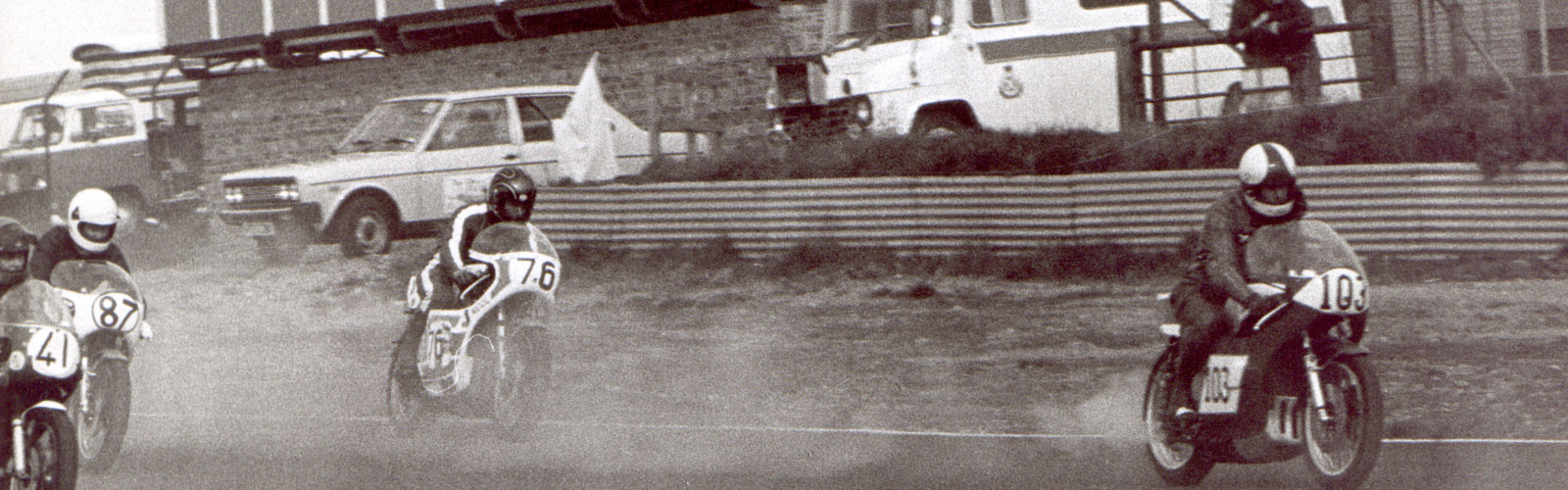
In the autumn of 1974, the inaugural Motorcycle Race meeting was held at Knockhill Racing Circuit and Scotland’s National Centre for Motor Sport was born!
-
80's
After many attempts by Tom Kinnaird and several local motor club enthusiasts in the late 70’s, the circuit had many false starts. In 1983 Derek Butcher, an enthusiastic motorcycle racer, purchased South Lethans Farm and all its assets from Tom Kinnaird and Knockhill Racing Circuit was born again.
-
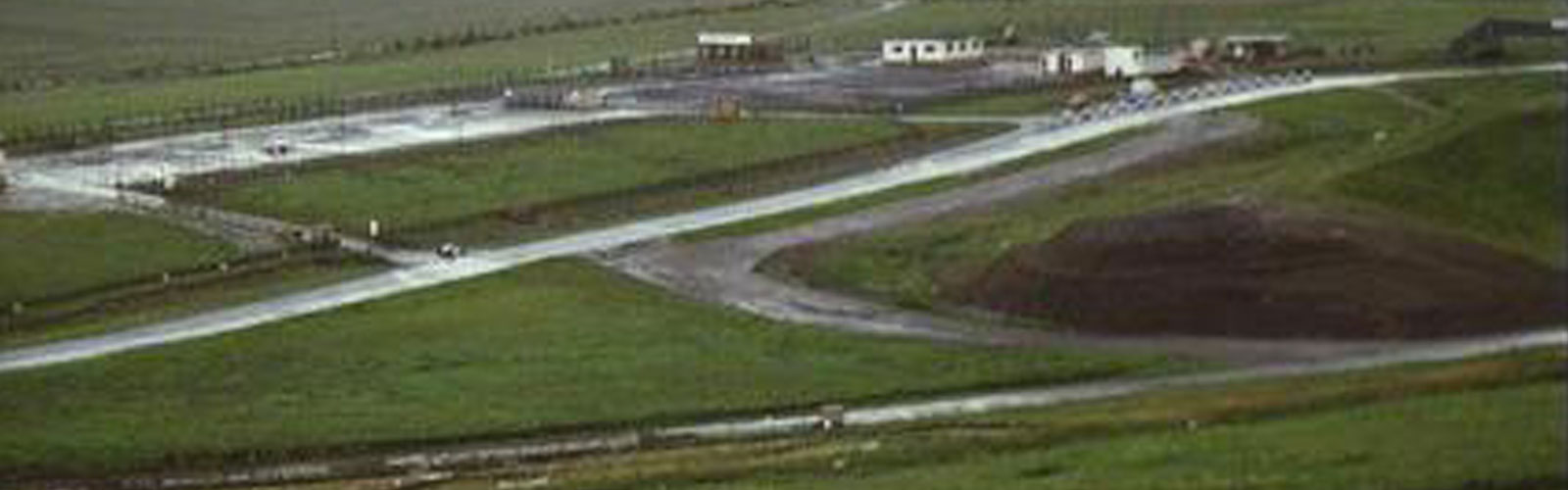
The investment process started with the creation of roadways and race paddocks, spectator areas and even toilets!
-
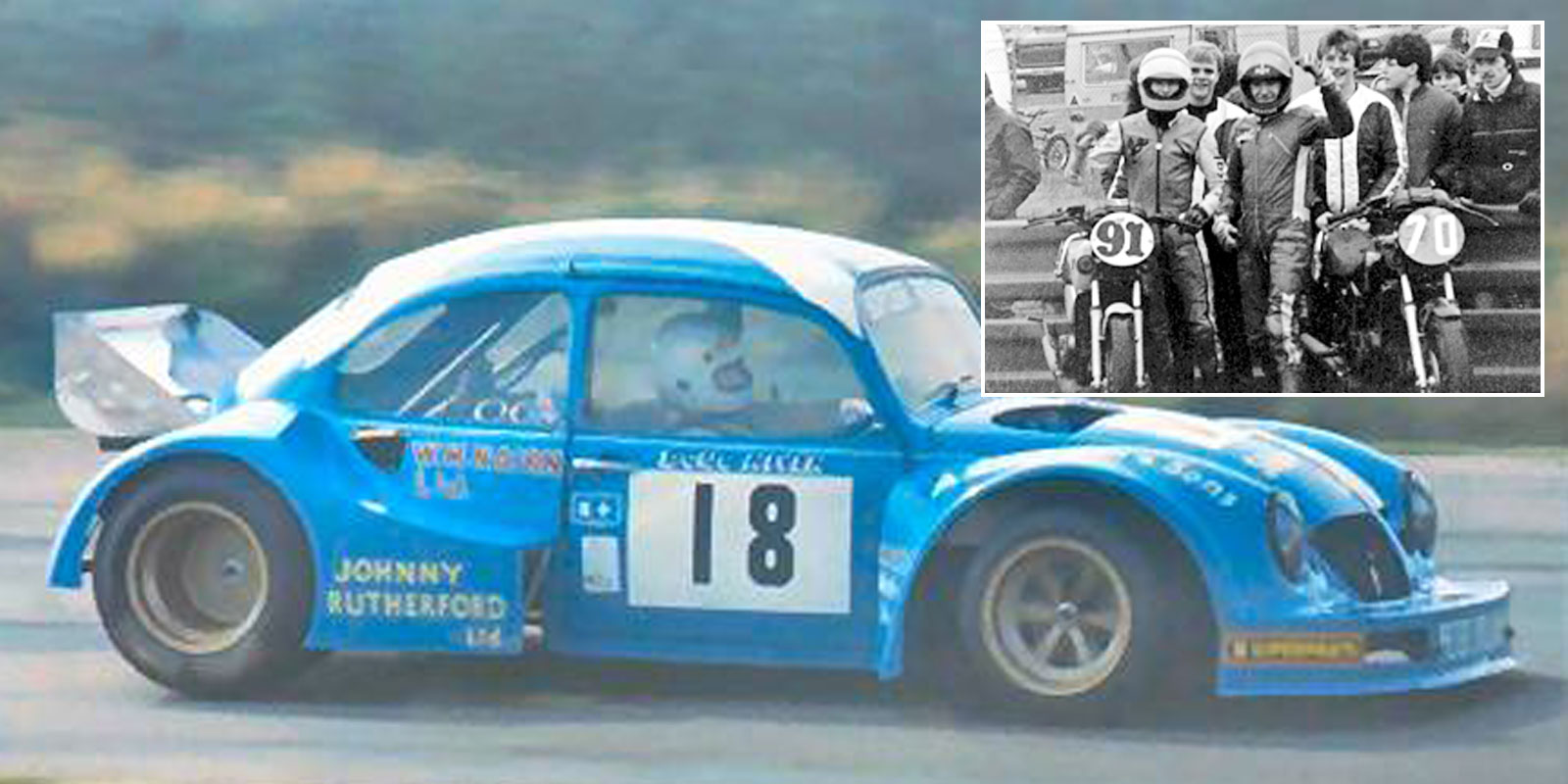
The Scottish racing scene was strong with racing for cars also running at Ingliston and for bike East Fortune and Beveridge Park. Local racing heroes included Ian Forrest and John Fyda in their Hilman Imps, Stuart Lawson in Formula Ford and Doug Niven, cousin of Jim Clark, in his infamous VW Beetle with a 5litre V8 engine. In the bike scene the young guns starting their careers were Donnie McLeod, Niall Mackenzie, Gary & Steve Hislop, Jim Moodie, John Crawford, Brian Morrison and Roger Bennett. Many of those names would go on to ride in some of the most competitive events in the World.
-
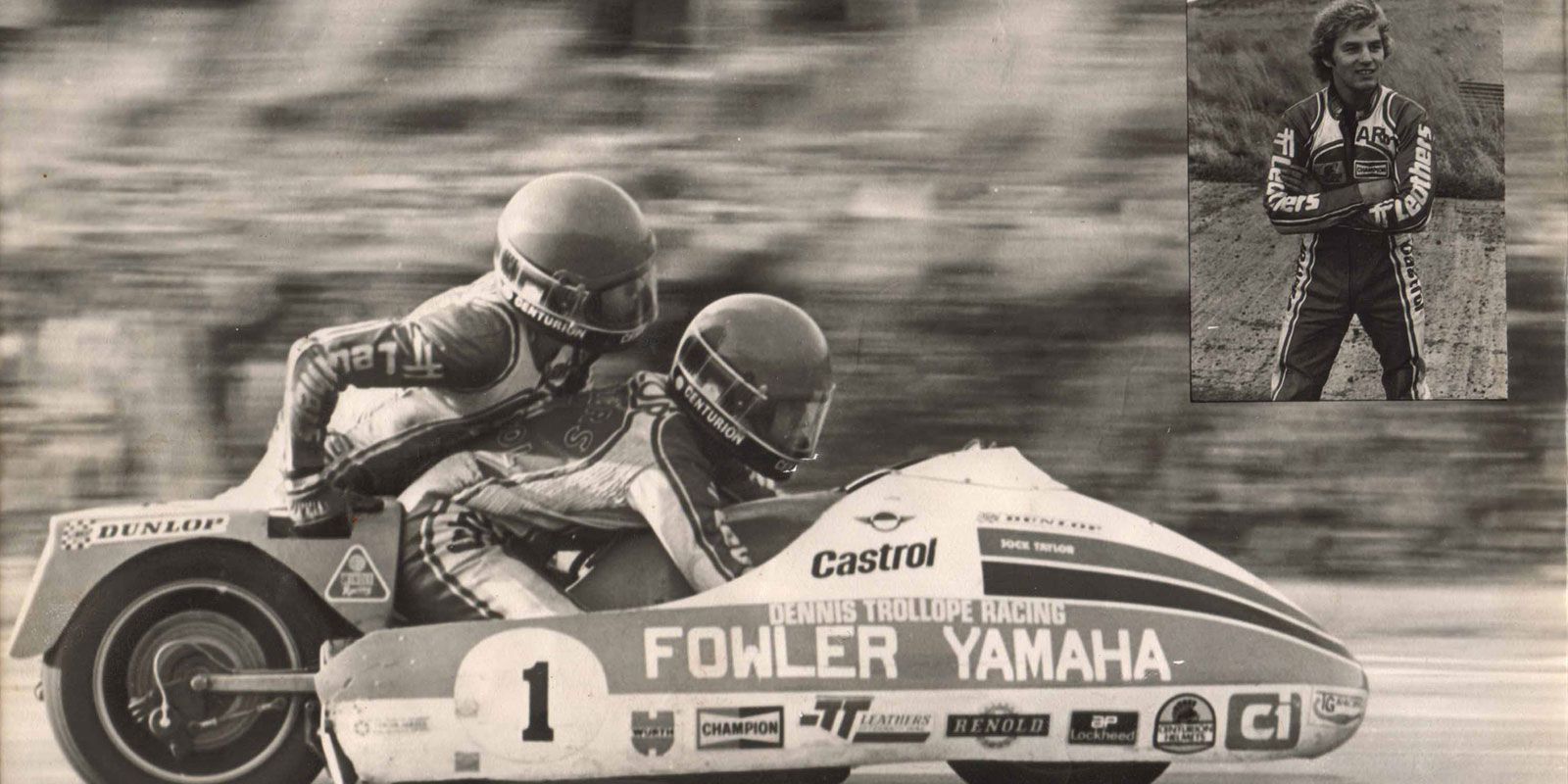
On 3 wheels, a young Jock Taylor would compete in the sidecar races before moving on to the world stage, achieving sensational success by becoming World Champion and TT winner & record holder.
-
In the car racing scene David Leslie jnr & snr ran a successful racing team based at the circuit. They can be credited for the early careers of Allan McNish & David Coulthard. The young drivers spent many long days pounding round Knockhill learning their transition from karts to cars.
-
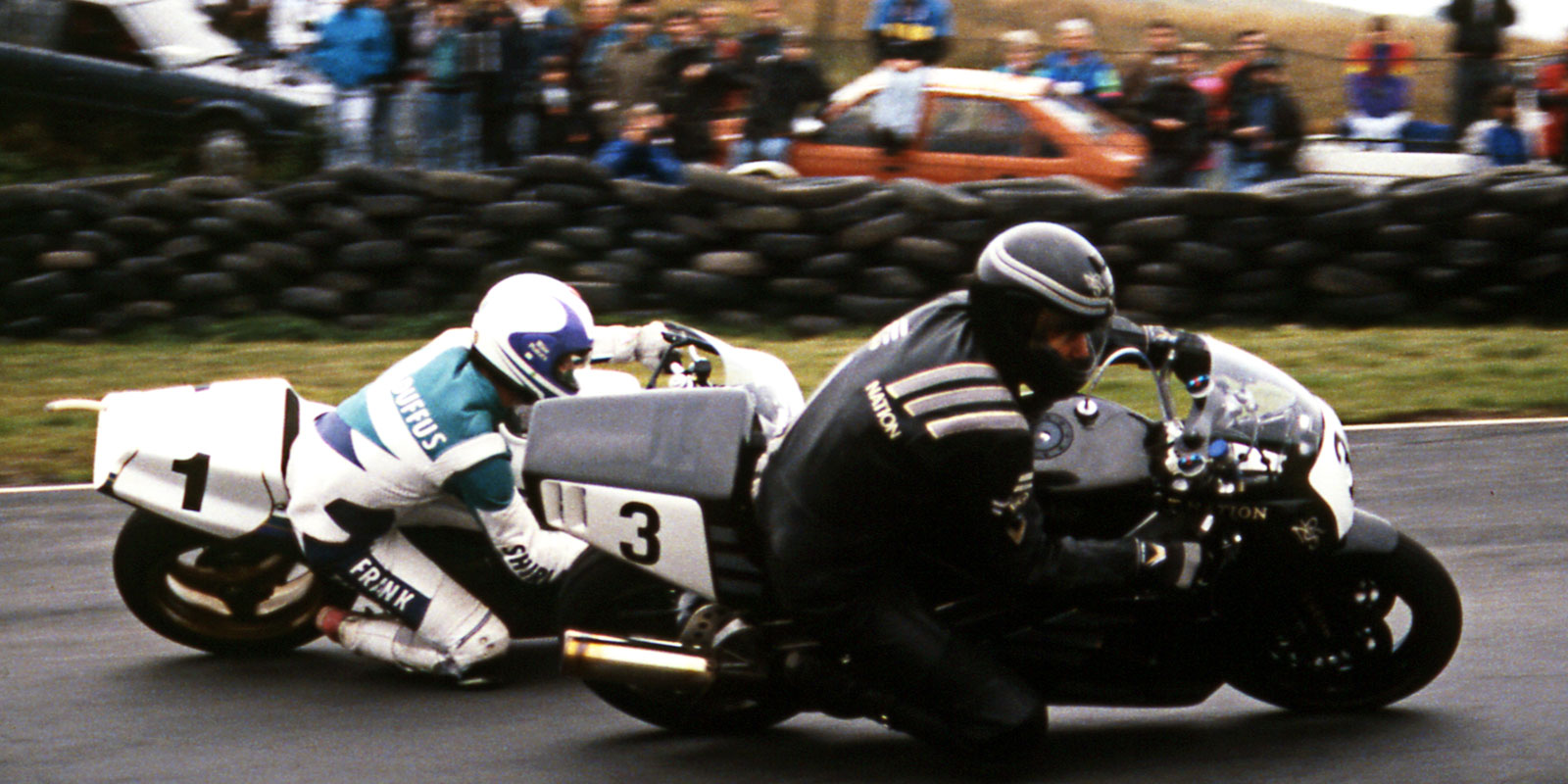
The original British Superbike Championship, known then as the MCN Supercup, first came to Knockhill in 1989. The sleek JPS Norton Motocycles with Steve Spray and Trevor Nation put british motorcycling back on the map.
-
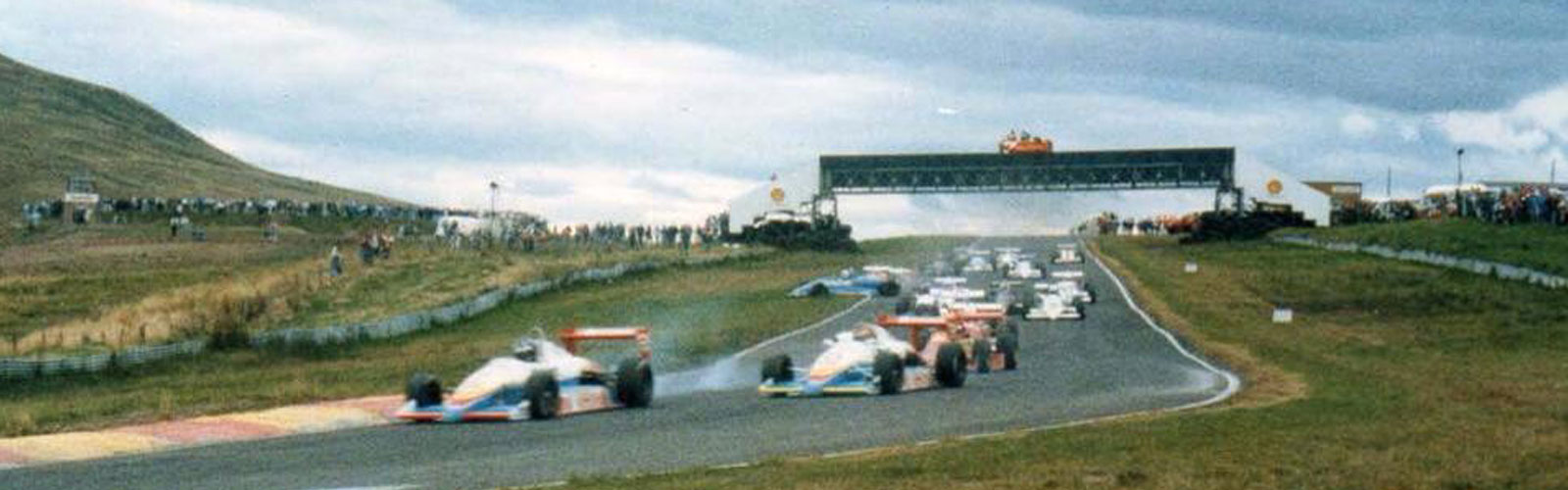
In 1988 the first visit of British F3 arrived with the Cellnet Scottish Superprix . After securing pole position, unfortunately Damon Hill’s race only lasted 200 metres when he tangled with Martin Donnelly and they both landed in the Duffus Dip gravel trap.
-
90's
In the 90’s Scotland was the dominant force in bike racing. The regular racers from the Scottish scene would go on to greater things on the world stage: Niall Mackenzie (500 GP), Iain Duffus (TT Winner), Brian Morrison (TT, Macau GP, Le Mans), Ian Simpson (BSB), the late Steve Hislop (TT Winner, BSB), John Crawford (BSB), Jim Moodie (TT lap record holder, BSB), Roger Bennett (Macau, Le Mans) and Iain MacPherson (BSB, WSS).
-
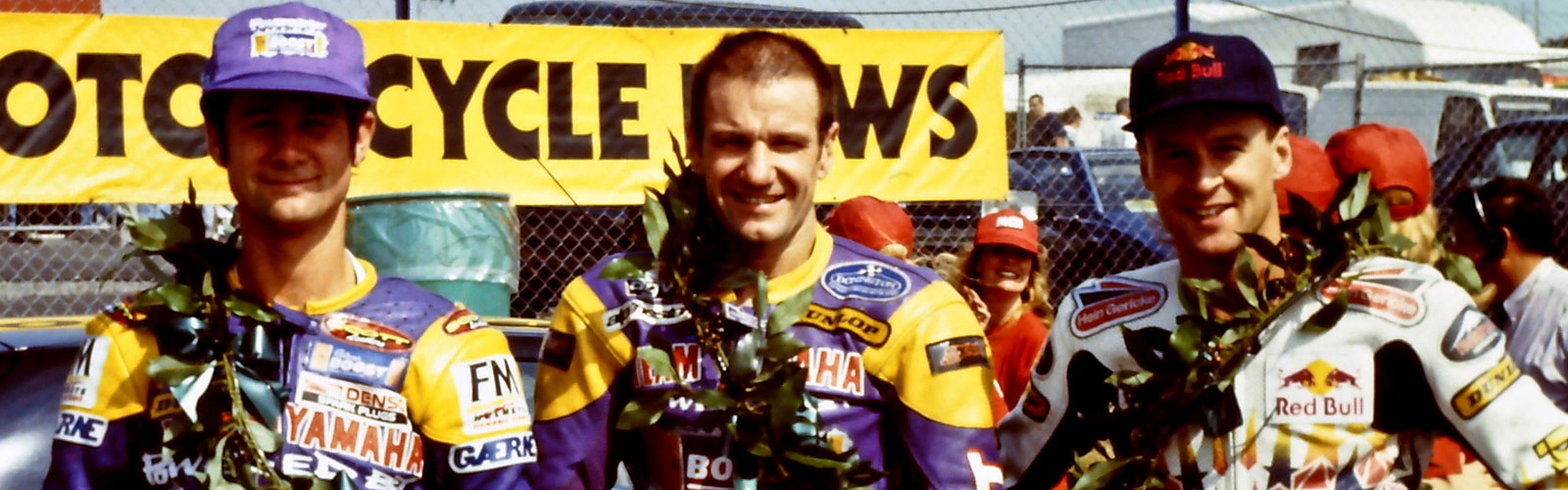
The Supercup event in the early 90’s would see titanic battles between John Reynolds, Terry Rymer, Robert Dunlop, Rob McElnea and Brian Morrison. The championship regulations moved to the Superbike standard used worldwide and the British Superbike championship as we know it now was formed in 1993. Iconic riders and race teams would provide endless action and legendary battles - memorable teams and riders include: Mackenzie in the Cadbury Boost team alongside Hislop and Jamie Whitham, INS GSE Ducati Team with Troy Bayliss, Duckhams Norton with Jim Moodie and Ian Simpson and the Fast Orange Yamaha team headed up by Ron McElnea.
-
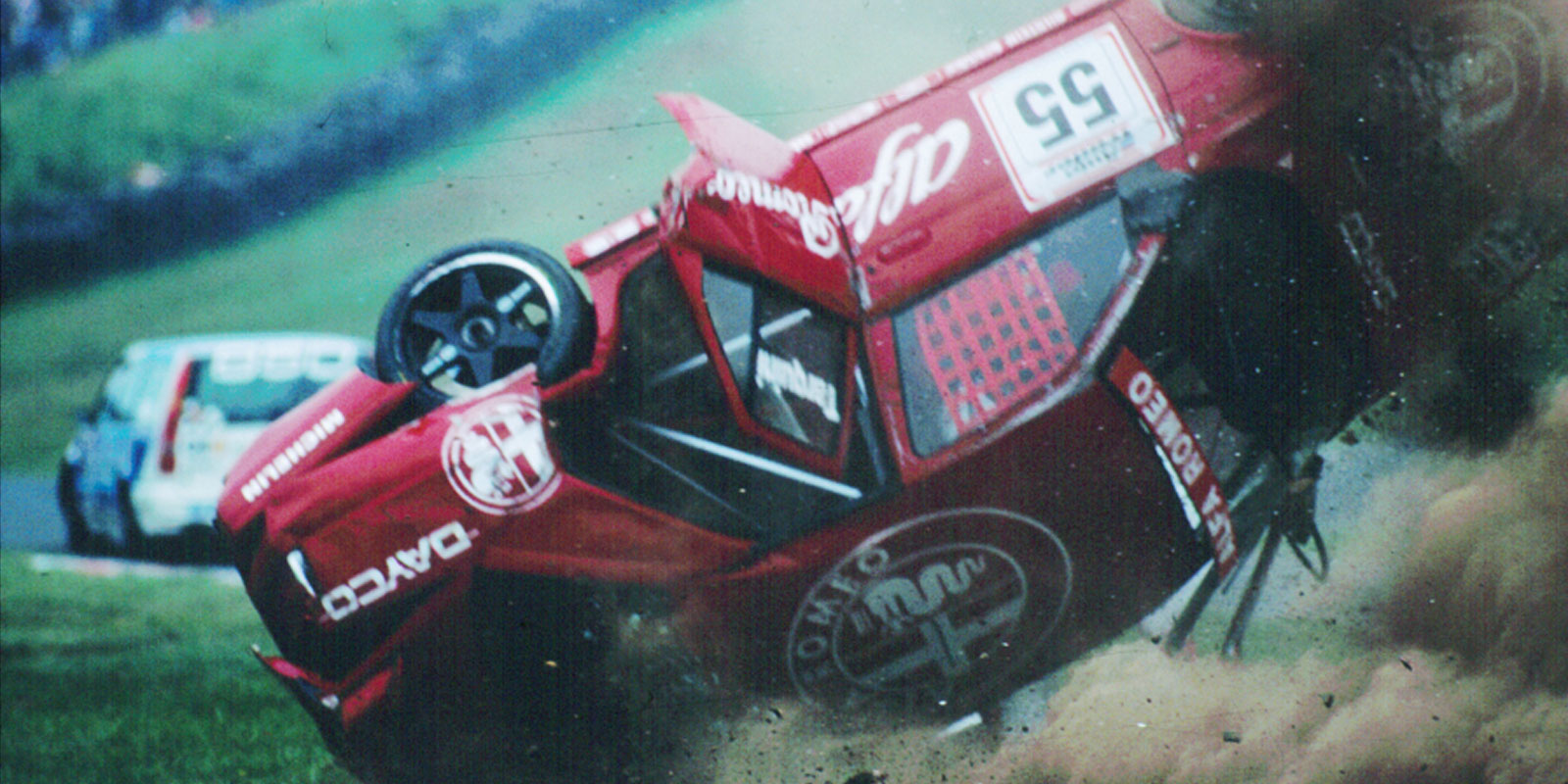
1992 also saw the arrival of the British Touring Car Championship. The huge number of Scottish fans in attendance were treated to spectacular racing and spectacular crashes! The late great David Leslie rolled his Ecurie Ecosse Cavalier at the bottom of the first corner (corner now named Leslie’s). And Gabrielle Tarquini’s Alfa Romeo barrel roll (thanks to Tim Harvey) at McIntyres corner. Colin McRae deputised for an injured Alain Menu and made his mark on the car of a young Matt Neal at the hairpin!
-
Fans favourite John Cleland won his 2nd championship in 1995 in the final year of the Vauxhall Cavalier.
-
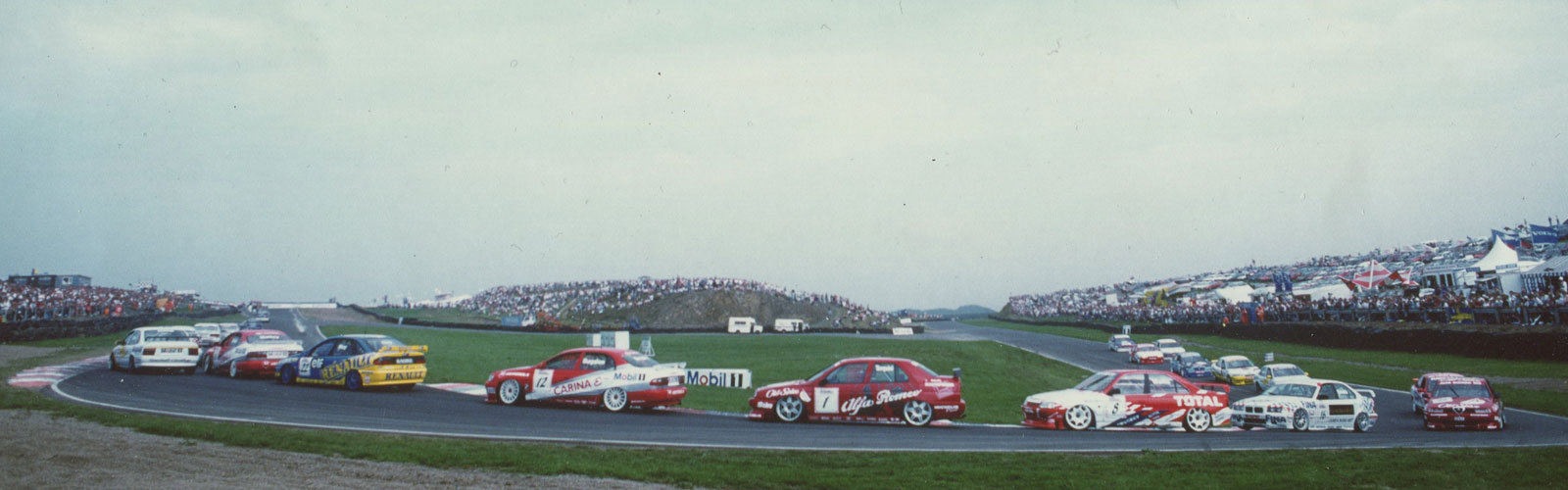
The 90’s saw the iconic 4 wheel drive Audi’s dominate with Frank Biela and John Bintcliffe. The estate Volvo run by Tom Walkinshaw Racing, the Renault Laguna run by Williams Grand Prix Engineering and the BMW’s run by Schnitzer BMW were all manufacturer backed teams proving the high profile the championship had reached.
-
00's
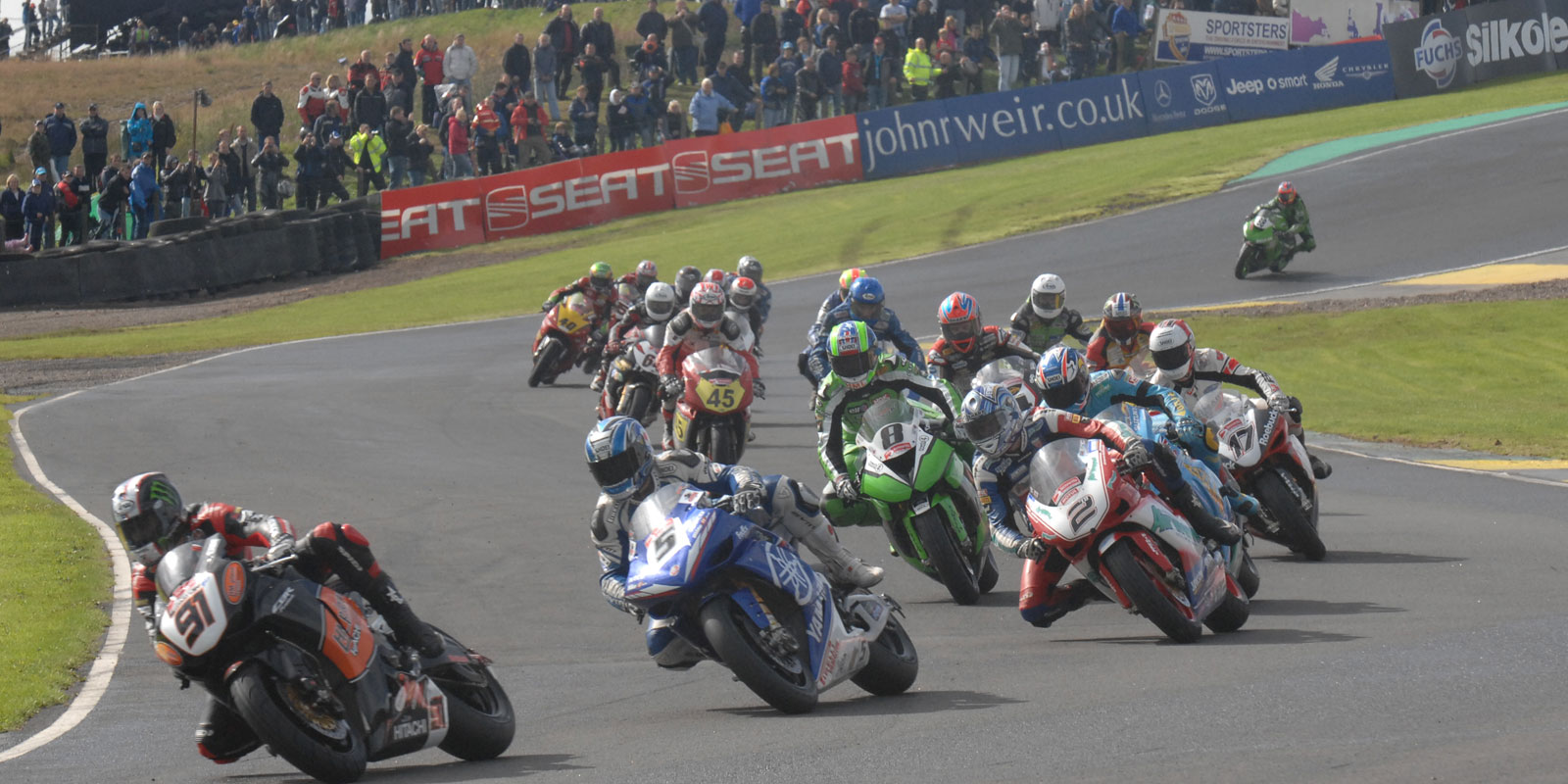
The British Superbike championship stepped up a gear and had a truly international feel about it. With international stars flocking to the championship to ride some of the best bikes in the world included: Troy Bayliss, Yukio Kagayama, Jonathan Rea, Gregorio Lavilla, John Hopkins, Ryuichi Kiyonari and Atsushi Wantanabe.
-
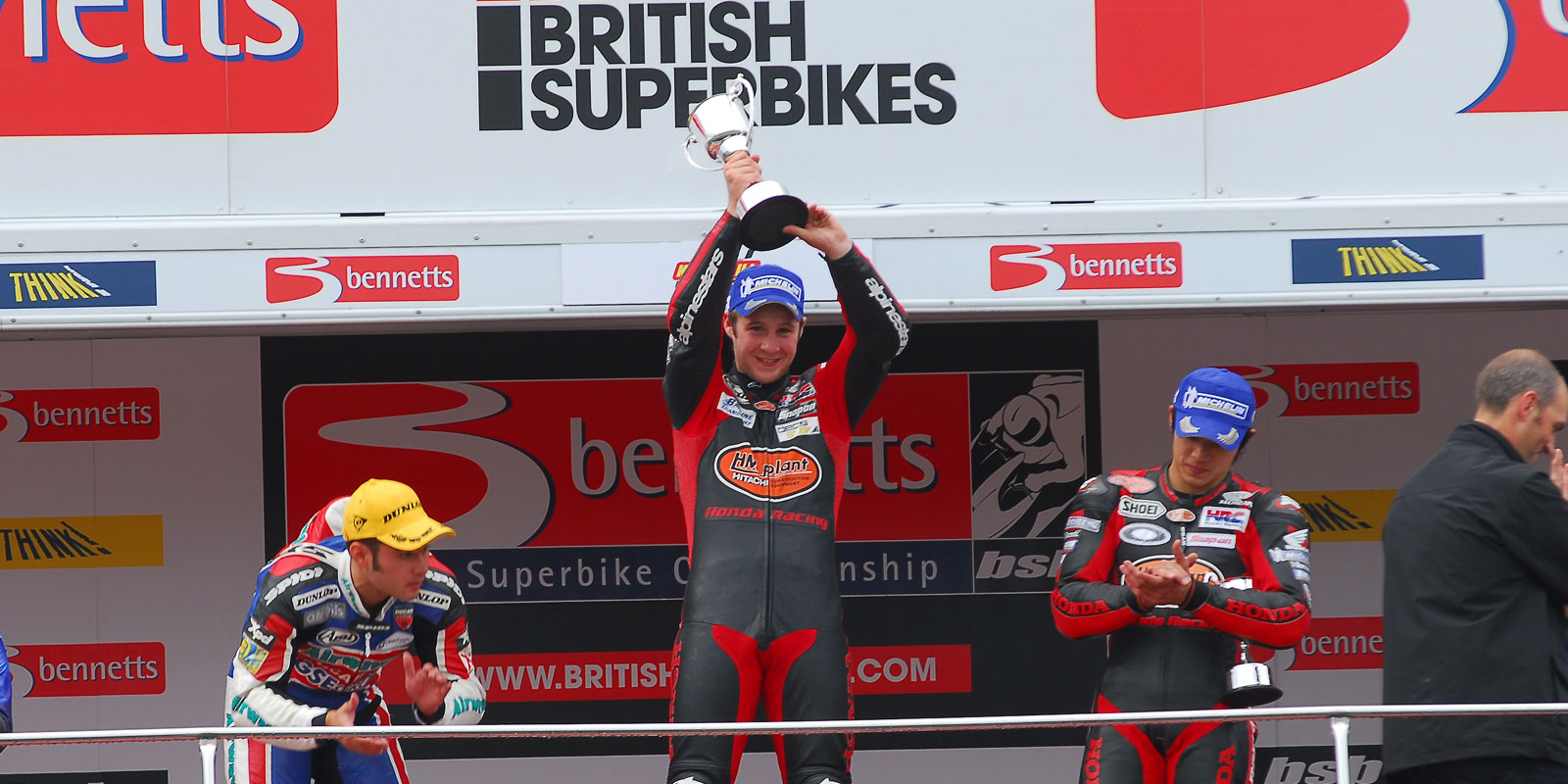
Memorable moments from the Superbikes include Troy Bayliss losing a footpeg and almost winning the race. John Hopkins started a new dance craze after falling off at Duffus Dip, thankfully unhurt. Current MotoGP riderz Eugene Laverty was also another high profile rider to raise eyebrows when he sensationally lapped a dry circuit in 49s seconds on his RedBull Rookies Supersport 600 Honda in 2006 and fellow northern Irishman Jonathan Rea lapped a wet Knockhill in 51s aboard his HM Plant Honda on his way to a double win in 2007 both sensational in their own right.
-
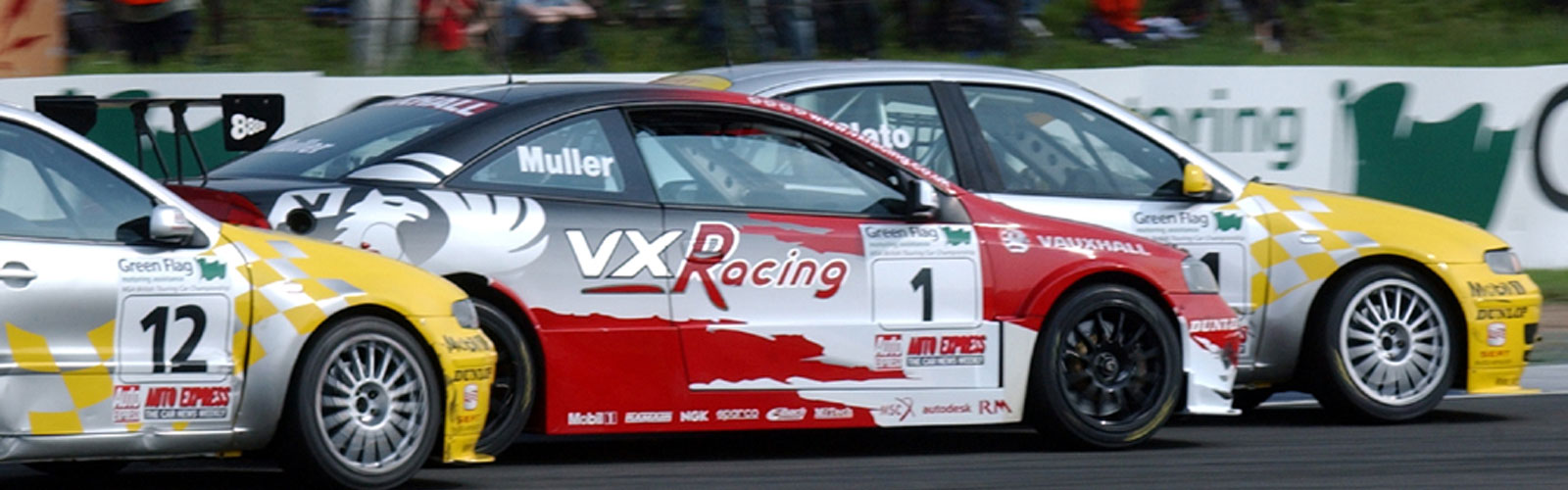
In 2000 the Supertouring Era of Touring Cars was drawing to a close, still with an array of superstar drivers including ex F1 and Sportscar stars: Tom Kristensen, Peter Kox, Rickard Rydell, Yvan Muller and Alain Menu to name just a few but in 2001 BTC Touring regs took hold and most manufacturers took a back seat while only a handful stayed to battle the more Team built cars, however the future for BTCC was set by the introduction of NGTC era which we still see racing today with the return of higher profile drivers and notable teams running them.
-
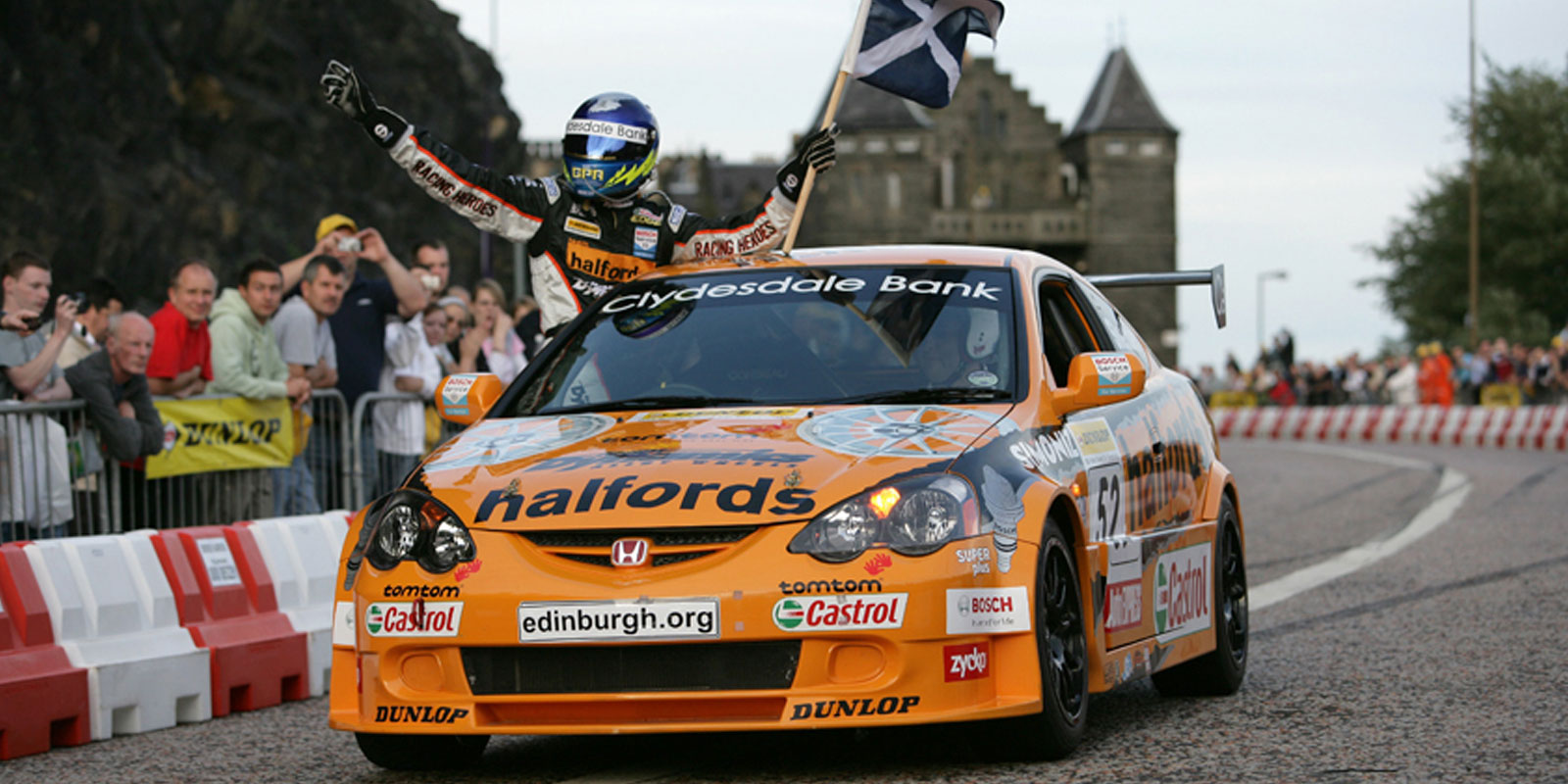
Throughout the 2000s Knockhill provided the “Action” on the BTCC calendar for all fans providing controversy and heartache along the way . Famously Jason Plato ripping a wheel of his Seat in a tangle at Clark and ending up at the hairpin, returning TV Pundit Paul O’Neil arrived back with a “Bang” in a one off drive in 2014 and all the insane kerb hopping antics featured in more motorsport editions than any other corner.
Follow us on Social Media
Connect with other people, get the latest info, discuss the most recent topics on Motorsport in Scotland.
About Knockhill
Over 40 years as Scotland’s National Motorsport Centre and host to the UK’s top televised motorsport car and bike events. Knockhill is situated just 30 mins from Edinburgh, 40 miles from Glasgow and 2 hours from Aberdeen. Knockhill is a truly versatile venue and the perfect choice for all events including Corporate Days, Team Building, Karting, Trackdays and exciting Driving Experiences.
Our Venue
Scotland’s only accredited FIA and MSA approved venue! With extensive and ongoing investment in our facilities we are able to provide, new and exciting, experiences and racing events that are rivalled by no other. Our famous 1.27 mile long circuit, hillside rally stage, 4x4 off road track, 500m outdoor karting circuit, skid pan, restaurants and conferencing facilities form our unique venue.
Our Team
One of our finest assets and always a hot topic with our customers! We strive to provide the best possible experience and our skilled team play an important part in delivering these. Everyone is friendly, approachable, correctly qualified and passionate about their role at Knockhill; from our ground staff, instructors, sales team and directors. We all look forward to welcoming you to Knockhill.